In football maybe, in the NBA the top players are much more valuable.
Which is what the author said:
Author said:
History says that the top couple of picks do create a disproportionate number of stars and win shares but beyond that the way we (the average NBA fan) think about, for example, picks 5-10 is pretty far off. There's not a HUGE difference between 6 and 14 historically but it feels like there is because of how we talk about the draft.
Since the only way we could get a top 5 pick is via trade, it's the second bolded part that is more applicable to our current situation.
I quoted your post, but the rest is really about this methodology in general, and Olshey's option in the upcoming draft.
It's nice to see someone attempt to quantify the relative value of NBA draft picks. Of course, a large portion of superstars come out of the high end of the lottery, especially the top 3 picks, but history has also shown that the rest of the draft is a crap shoot. In each and every draft, there are plenty of players chosen between 6 - 14 that are total busts, and there are future stars taken between 15 - 30 (and often the second round, as well).
So, what he concludes makes sense, you're better off to have three picks between 15 - 30 than one pick in the 6 - 14 range. It's a numbers game. Given that historically, the odds of hitting a home run (aka: getting a superstar) between 6 - 14 isn't much better than hitting a home run between 15 - 20, you're better off with three chances to hit one out than one chance. With three picks, you also improve your odds of getting a double (future starter) and a single (role player) or two.
In any case, just looking at the numbers in the chart makes me wonder if Neil has a similar philosophy. Remember in his interview after the Nurk trade he said he just didn't see much difference between picking 10th vs. picking 15th in this draft? Well, whether or not he had a similar draft table, t's worked out exceptionally well for him.
Trading for Nurk killed our tanking effort, but it didn't really hurt our draft prospects as much as the pro tank faction would like to believe. Why, because that additional draft pick we got from DEN effectively offsets our own pick dropping out of the lottery. If he had not made that trade, at the time, it was looking like we would be picking in the 10 - 12 range. But, like us, several other teams, particularly in the Eastern Conference, made late season play off pushes. If we had not made the trade and continued on our current, at the time, trajectory, we would have drafted no better than 8th (we would have tied DAL for the 9th worst record, so likely drafting 9th or 10th).
His math might not be perfect, but assuming we end up with something like 15th, 20th and 27th, that's just as good, according to the table, as having the 8th pick. Plus we still have the option to bundle picks to move up, if we desire. Olshey got us our 3rd piece in Nurk, plus managed to preserve our draft value, while adding flexibility. That trade wasn't just a home run, it was a grand slam.
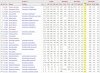
The quoted article was from 2015, so the author only used data up to 2010, so he'd have a complete five year data set to work with. The drafts since 2010 have not just reinforced his conclusions, they have strengthened them. Just look at the 2016 draft. If you sort the 2016 draft by WS, you will see that 4 of the top 5 players were taken outside of the lottery:
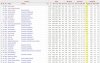
Now go back to the 2013 draft and do the same thing:
Or better still, sort by VORP:
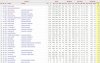
If you had had the 15th, 21st and 27th picks in the 2013 you could presently have a starting front court of Rudy Gobert at center, Gorgui Dieng at PF and Giannis Antetokounmpo at SF. I'm not saying Olshey will hit a similar trifecta in the 2017 draft, it is after all still a crap shoot, but even if he just goes 1 for 3, it could really help our team going forward.
BNM