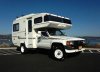
this is really a complicated question/answer
start with what type of RV you want to rent...? is it safe to assume you don't want to tow an RV and would rather rent a motorhome/coach...? I say that because towing a vehicle opens up a wide range of potential stress. More than that though is you still need to have a good towing vehicle with decent power and suspension
so then, if it's a motorhome/coach rental you're thinking of, you'll start with a nightly fee (which can sometimes be reduced by a weekly or multi-night rental). Expect around $200/night. That doesn't include mileage fee's or gas.
I just googled and came up with this example:
https://www.outdoorsy.com/rv-rental/dallas_or/2017_ford_fourwinds_117028-listing?from=&to=
(check all the photos)
my guess is you should expect to get 6-12 miles per gallon depending on the size of the RV.
say you're taking a 15 day trip and planning on traveling 1500 miles. That would be $3300 for the RV plus $400-800 for fuel. But that's not all because unless you are dry camping you could also be paying $20-50 a night for a camping site. That could add $300-700 more in basic cost. You can save some by dry camping a few times in Forest Service or BLM campgrounds, but you won't have power or water hookups. And you'd need to be cautious not to drain your 12 volt RV batterie(s) with too heavy electrical use
just glancing at that cost tally, you're looking at $4500-$6000. But you might be able to reduce that quite a bit by the size of RV and options you choose
keep in mind that you can offset costs from a 'normal' vacation. The cost of lodging can be $125-250 night (or more if you're going to heavily visited popular destinations) You'll be able to store and prepare your own food, which would save a lot of money over eating out every mean and have the bonus of 'minimizing' your covid exposure. And of course you'd still have travel costs thru mileage and fuel in a normal vacation
all-in-all I'd say it would cost more to rent an RV but the offset between RV and 'normal' might not be as much as you might think
but keep in mind, if you've never driven a bigger vehicle or used and RV you will be facing leaning curves. You really need to research. If you are tall, some of the beds in RV's won't be adequate. Fine one online you're interested in then go to a RV dealer and explore the interior of a similar RV. Your vehicle is much longer than a car with a much bigger turning radius. And your blind spots will be bigger.
That RV I linked has a 40 gallon fresh water tank. That can last a while if you get into an RV frame of mind, but your water consumption habits will have to change. RV's have two holding tanks for RV waste water: a gray water tank for sink and showers; and a black water tank for the toilet. They will fill up fast if you don't pay attention. Normal showers are nixed, but many RV camping sites will have showers you can use. That RV had an 8 gallon propane tank. That will fuel your cooktop/oven; water heater; and refrigerator when you're not hooked up
you'll need to visit a dump station most likely to drain your holding tanks. That's a little adventure all in itself. You'll likely need to have some black water treatment to add after each draining so your shit won't stink.
I know for many it sounds intimidating, but I've known some people who have rented an RV for a summer vacation and have bought their own within a year. Of course, there are people who do this and say "
fuck that, never again"
My wife and I "graduated" from tents to a camper 28 years ago. And we graduated for a camper to a 5th wheel 16 years ago. And we love it.